See The Formula's Full Ingredient Breakdown
Now that you understand the mechanism, explore the pricing and secure your supply today.
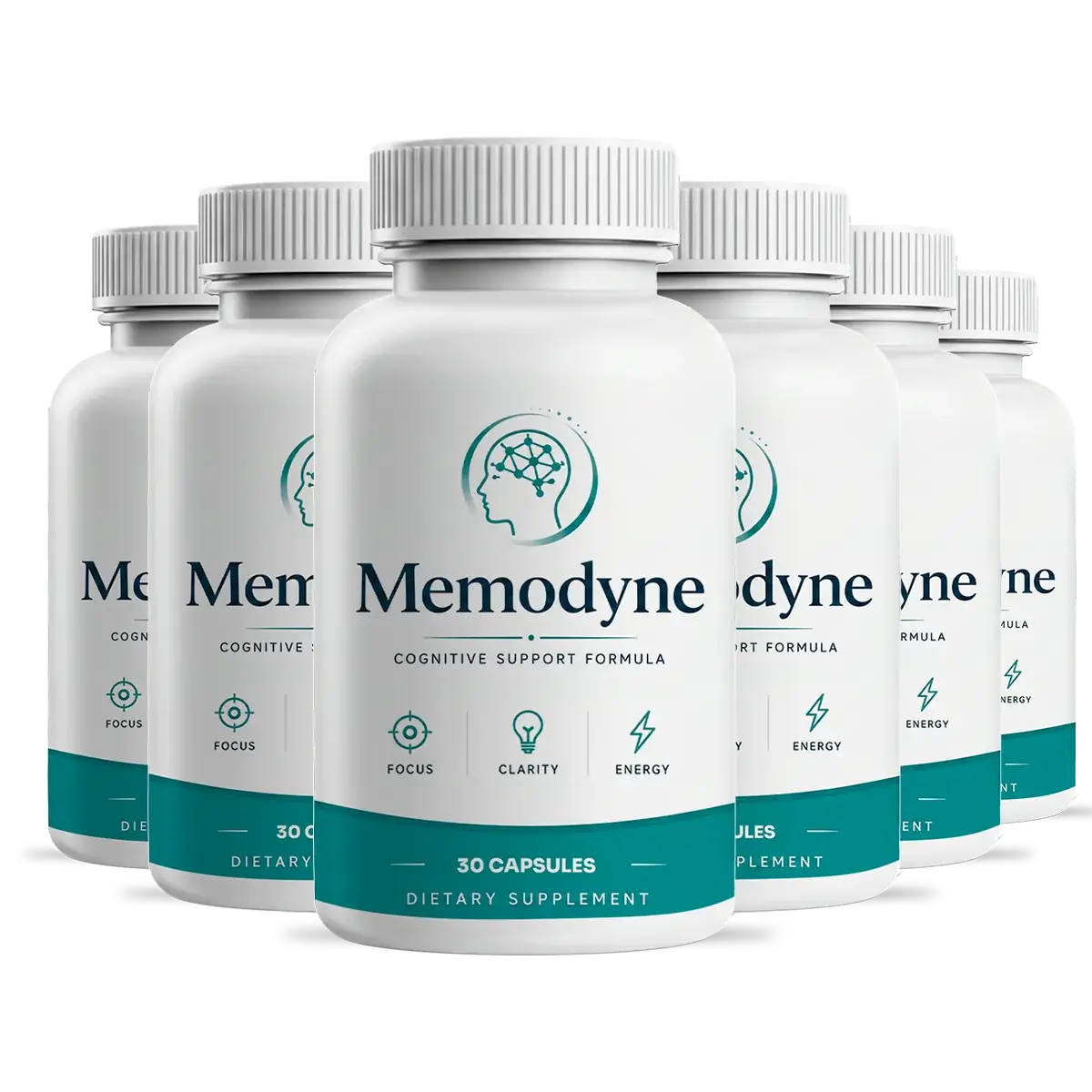
A walk-through of the biological pathways Memodyne is formulated to support — from blood flow to cellular energy to long-term cell protection.
Your brain is one of the most metabolically demanding organs in your body. Even though it makes up a small percentage of your total body weight, it uses a disproportionately large share of your daily energy and oxygen supply. When that supply is inconsistent — whether from poor circulation, cellular fatigue, or accumulated oxidative stress — the effects tend to show up as exactly the kind of things people associate with cognitive decline: forgetfulness, slower recall, and that foggy, unfocused feeling.
Memodyne is built around three connected pathways that all feed into how well-supplied and well-protected your brain cells are: circulation, cellular energy production, and antioxidant defense. None of these ideas are exotic or invented for marketing purposes — they're well-established areas of nutritional science, and Memodyne's formulation simply channels specific nutrients toward supporting each one.
Four of the six ingredients in Memodyne — L-Arginine, L-Arginine AKG 2:1 Extract, L-Citrulline HCL, and L-Citrulline Malate — are connected to the body's nitric oxide pathway. Nitric oxide is a naturally occurring molecule that helps relax and widen blood vessels, a process called vasodilation.
When blood vessels are able to relax properly, blood can move more freely, carrying oxygen and nutrients to tissues that need them — including brain tissue. The formula layers a fast-acting form (L-Arginine) with a slower, extended-release form (the AKG-bound version) and a recycling precursor (L-Citrulline), so the supportive effect on circulation isn't limited to a single narrow window during the day.
L-Citrulline HCL and L-Citrulline Malate both feed into the same arginine-recycling pathway, but the malate-bound version adds a second function: supporting the clearing of metabolic byproducts that build up during mental exertion, which is one contributor to that heavy, end-of-day fatigue.
Blood flow only solves half the equation — once oxygen and nutrients arrive at a brain cell, that cell still needs to convert them into usable energy. This is where Niacin comes in. As a B-vitamin, niacin plays a direct role in producing NAD+, a molecule that powers the mitochondria inside every cell, including neurons.
Think of NAD+ as the currency your brain cells spend to do their job — forming memories, processing information, maintaining focus. Supporting its production is one way nutritional science connects to sustained mental energy rather than the short bursts associated with stimulants.
The third pathway is about defense rather than fuel. Beta-Alanine supports the body's production of carnosine, a naturally occurring antioxidant compound. Antioxidants are involved in helping neutralize the everyday cellular stress that builds up from normal metabolic activity, environmental factors, and the general wear of a demanding routine.
Over time, unmanaged oxidative stress is one of several factors researchers associate with declining cellular function. Supporting the body's own antioxidant defenses is a preventative piece of the formula, working alongside the circulation and energy pathways rather than replacing them.
Because Memodyne works through nutritional pathways rather than a stimulant effect, it isn't designed to feel like flipping a switch. A more realistic way to think about it:
The formula's nutrients begin supporting circulation and cellular energy pathways with each daily dose.
Consistent daily use is when many people report starting to notice a difference in focus and mental clarity.
Continued daily use is intended to help sustain the supportive effect on circulation and antioxidant protection over time.
Each of the three pathways described above depends on a steady nutrient supply rather than a one-time dose. Blood vessels don't stay dilated indefinitely from a single capsule, cellular energy production is an ongoing process, and antioxidant defenses need continual replenishment. That's precisely why Memodyne is formulated as a once-daily capsule intended for consistent, long-term use rather than an occasional or as-needed product.
Common questions about how Memodyne works
Nutrient-based pathways like circulation support and cellular energy production tend to build gradually with consistent use, rather than producing an immediate switch-like effect.
No. Memodyne's mechanism centers on supporting blood flow and cellular energy rather than stimulating the nervous system the way caffeine does, so it is not designed to produce a jolt-and-crash pattern.
The brain depends on a steady supply of oxygen and nutrients delivered through blood vessels, so supporting healthy circulation is one way to help support the conditions neurons need to function well.
Neurons rely on a constant supply of cellular energy to transmit signals; supporting that energy production is one mechanism connected to sustained mental clarity and focus.
Taking Memodyne with a meal is generally recommended, as it may help support consistent absorption of the formula's nutrients.
Now that you understand the mechanism, explore the pricing and secure your supply today.
Memodyne is a natural brain health supplement combining six nutrients formulated to support memory, focus, and everyday cognitive clarity.